· Web Architecture · 6 min read
The n8n v2.17 Architecture Shift: Orchestrating Multi-Agent Systems
A technical deep-dive into how n8n v2.17 transitions from linear workflows to a governed orchestration platform for AI agents in 'Digital Departments'.

TL;DR: The 2026 n8n architecture pivot, culminating in v2.17, transforms the platform from a linear automation tool into a governed, low-code orchestrator for collaborative AI agents. This enables ‘Digital Departments’ by introducing core mechanisms like Workflow-as-a-Tool, stateful persistent memory, and granular telemetry, securing multi-agent systems for enterprise-scale deployment.
Introduction: From Linear Pipelines to Agent Orchestrators
The historic challenge in AI automation has been the dichotomy between flexibility and governance. Pre-2026, n8n excelled at building complex, deterministic workflows—linear sequences of triggers, transformations, and integrations. However, the rise of Large Language Models (LLMs) and autonomous agents introduced a new paradigm: systems requiring dynamic reasoning, long-term memory, and inter-agent collaboration within a secure operational boundary. The old architecture, centred on a single execution thread, struggled with the concurrent, stateful, and often unpredictable nature of multi-agent systems. The n8n v2.17 release represents the culmination of a multi-year architectural shift, solving this by reimagining the platform as a specialised orchestrator where workflows become tools, agents have persistent context, and every action is observable and governable.
What is n8n v2.17 AI Agent Orchestration?
n8n v2.17 AI Agent Orchestration is the platform’s evolved capability to design, deploy, and govern collaborative systems of specialised AI agents within a low-code visual environment. It moves beyond single-bot automation by implementing a ‘Digital Department’ model: workflows become reusable tools agents can call, execution is isolated and secure, and agents maintain state across sessions. This architecture provides a central, auditable control plane for multi-agent systems, blending the reasoning power of LLMs with n8n’s native integration library and enterprise operational controls.
The Core Architectural Mechanisms
Workflow-as-a-Tool & The LangChain Visual Builder
The pivotal innovation is the ‘Workflow-as-a-Tool’ node. Any n8n workflow can now be published as a callable Tool, defined by its input schema and description. This directly integrates with the LangChain Tools interface, meaning any LangChain-compatible agent can instantly execute a full n8n workflow—accessing over 400+ integrations—as a single tool call within its reasoning cycle.
// Example: Defining a workflow as a Tool for an agent
const workflowTool = {
  name: 'process_customer_query',
  description: 'Fetches CRM data, checks support tickets, and returns a summary.',
  schema: {
    input: {
      customerId: 'string',
    },
  },
};
// The agent's chain can now call `process_customer_query(customerId)`.
This transforms n8n into a visual builder for LangChain toolkits. Developers compose complex backend logic visually, while AI agents treat these compositions as primitive functions. The separation between the draft editor and the published ‘tool’ runtime ensures live agent operations are never disrupted by development.
Pro Tip: When designing a workflow-as-a-tool, rigorously define the input JSON schema and output structure. This clarity becomes the agent’s “documentation” and prevents reasoning errors.
Stateful Agents & Governed Execution
Multi-agent systems require persistence and security. n8n v2.17 addresses this with two key features: Persistent Memory Nodes and Task Runner Isolation. First-class nodes for Redis, Postgres, and in-memory storage allow agents to read and write context across workflow executions, enabling “long-term memory” for conversations or task state.
-- Example logic using a Postgres Memory Node
-- Agent stores conversation context for retrieval next run
INSERT INTO agent_memory (session_id, agent_role, context_data)
VALUES ('sales_session_1', 'lead_qualifier', '{{ $json.qualification_summary }}');
Second, the new isolated Task Runners execute custom JavaScript or Python code within a sandboxed environment. This is critical for multi-tenant or self-hosted setups where agents, using the Computer Use HITL nodes, might execute scripts. The runner isolates the action, mitigating the risk of arbitrary code affecting the core orchestrator. Combined with Environment Variable Sandboxing—where variables are restricted by default—this creates a secure execution bubble for autonomous agents.
Why Does Granular Telemetry & Governance Matter?
Observability and control are non-negotiable for production AI systems. n8n v2.17 introduces Node-Level Token Telemetry, tracking input/output tokens per LLM node directly on the canvas. This provides instant visibility into cost drivers and performance bottlenecks within a complex multi-agent workflow.
The governance layer is enhanced by Expression-Based Role Mapping. Instead of static permissions, RBAC can now use expressions to dynamically map user roles based on identity provider attributes (e.g., {{ $('user').department === 'Sales' }}) during workflow execution. This allows intricate access policies tailored to the “Digital Department” concept, where departments like Sales or Support have distinct agent toolkits.
Pro Tip: Use the token telemetry to identify high-cost agent nodes and consider implementing caching or summarisation strategies within your memory nodes to reduce redundant LLM calls.
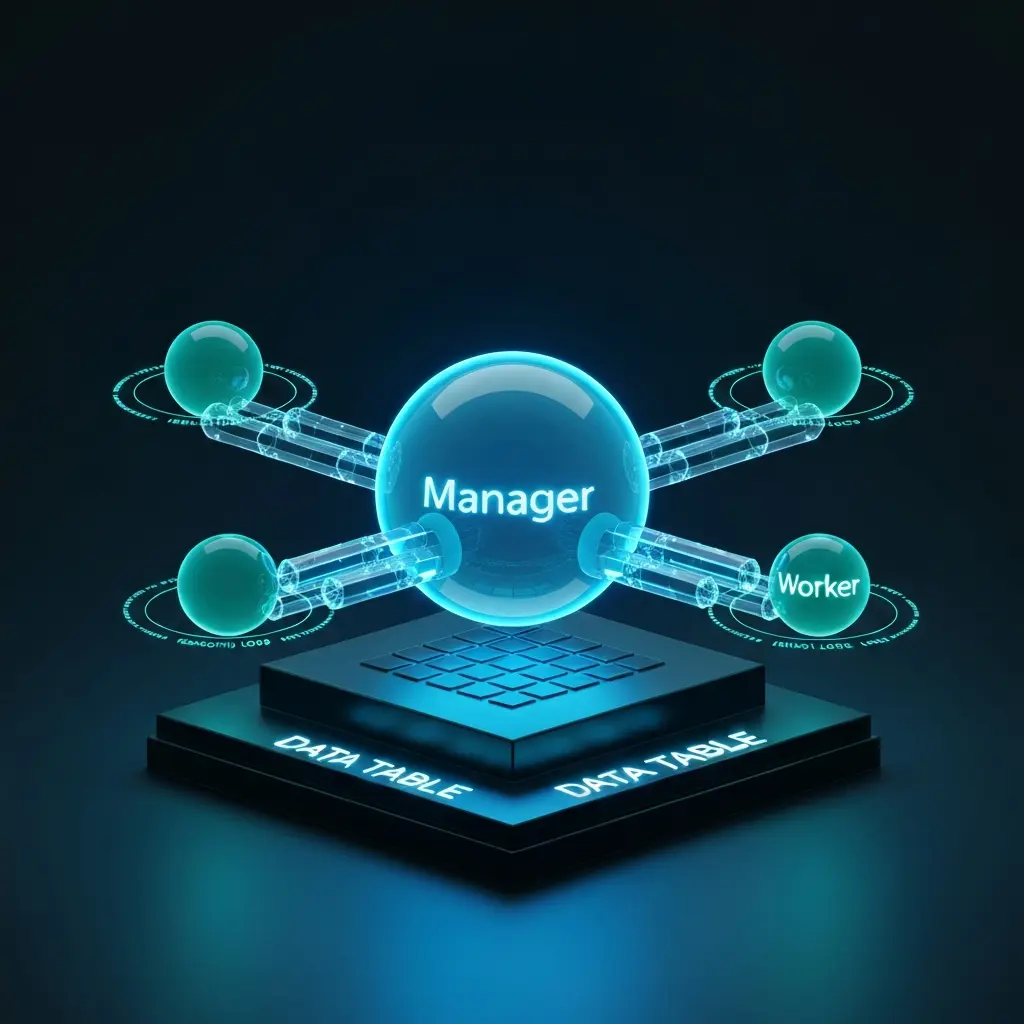
Furthermore, the new Computer Use HITL Confirmations require manual approval for high-risk OS or browser actions initiated by agents, enforcing a human safety brake. The Data Table MCP Tool Integration allows structured data to flow seamlessly between agent nodes and external MCP-compatible systems, enhancing interoperability. As noted in the official n8n documentation on MCP, this “enables a unified data context across different tools in the agent’s ecosystem.”
The 2026 Outlook: The Specialised Orchestrator
Looking ahead, the 2026 trajectory for n8n is clear: deeper specialisation as the orchestration layer for composite AI systems. We anticipate further development in agent communication protocols—perhaps native support for agent-to-agent messaging within the canvas. The performance foundations, like the SQLite pooling drivers that already deliver a 10x database throughput leap, will be extended to support even higher concurrency for event-driven agent swarms. The platform will likely evolve more specialised nodes for agent reasoning patterns (e.g., debate, reflection) and tighter integration with emerging agent frameworks beyond LangChain. The goal is a unified, visual, and governed plane where entire “Digital Departments” of collaborating agents are built, monitored, and refined.
Key Takeaways
- The ‘Workflow-as-a-Tool’ paradigm turns any n8n workflow into a callable function for AI agents, effectively creating a visual LangChain toolkit builder.
- Persistent Memory Nodes (Redis, Postgres) are essential for giving agents long-term context, moving beyond stateless, single-execution bots.
- Security for autonomous systems is baked in via isolated Task Runners, sandboxed environment variables, and Human-In-The-Loop confirmations for risky actions.
- Node-Level Token Telemetry provides granular cost and performance observability directly on the workflow canvas, crucial for managing LLM expenses.
- Dynamic, expression-based RBAC allows enterprise governance to map permissions to real organisational structures, enabling secure ‘Digital Departments.‘
Conclusion
The n8n v2.17 release is not merely an update; it is a fundamental architectural shift that repositions the platform at the centre of the emerging multi-agent landscape. By solving for statefulness, security, observability, and interoperability, it provides the missing orchestration layer that allows specialised AI agents to collaborate reliably within enterprise boundaries. This transforms ambitious concepts like ‘Digital Departments’ into practicable, governed systems. At Zorinto, we leverage this evolved architecture to help clients design and deploy such collaborative agent systems, ensuring they are built not just with capability, but with the necessary operational rigour for scale.