· Web Architecture · 6 min read
Engineering n8n v2.0: The Sovereign AI Orchestration Blueprint
n8n v2.0 introduces a foundational shift to secure, multi-agent orchestration with new paradigms for state management, protocol integration, and enterprise-grade performance.
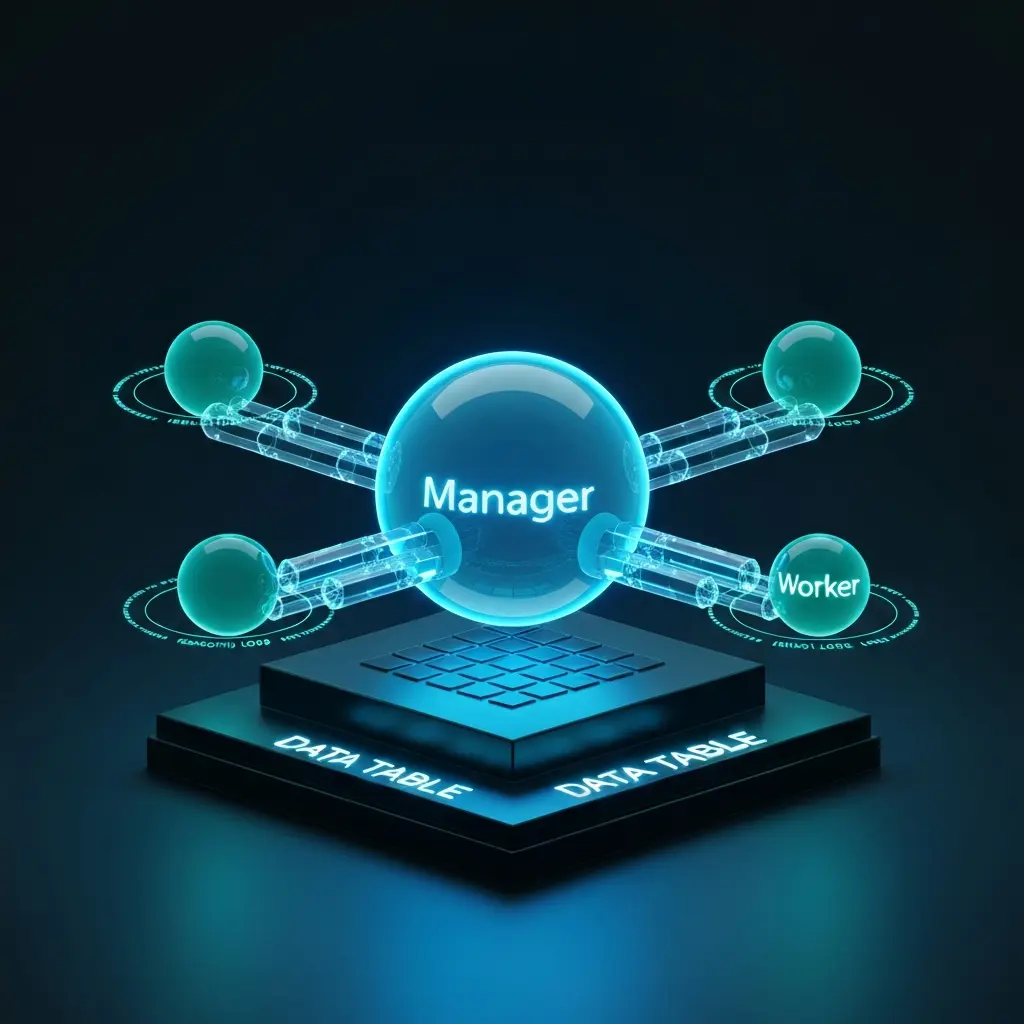
TL;DR: n8n 2.0 represents a foundational engineering shift from linear workflows to sovereign multi-agent orchestration. Its core innovations—the Publish/Save Paradigm, isolated Task Runners, and the Agentflow framework—provide the secure, stateful architecture required for scalable Manager-Worker AI systems in enterprise environments.
In the early months of 2026, the architectural challenge for engineering teams shifted decisively. Moving beyond the linear, deterministic logic of traditional automation, the industry now demands systems capable of orchestrating multiple, reasoning AI agents concurrently. This necessitates a platform that can manage complex state, enforce strict security boundaries, and provide deep observability—requirements that were often bolted onto, rather than baked into, earlier tools. n8n’s transformation, underscored by its substantial 2026 funding, directly addresses this gap, evolving from a workflow engine into a platform for sovereign AI orchestration.
What Are the Core n8n v2.0 Features?
The n8n v2.0 features constitute a comprehensive architectural blueprint for building and managing sovereign multi-agent systems. Sovereign, in this context, refers to AI operations that are secure, self-contained, and governed within an organisation’s own infrastructure and policies. The release introduces a suite of interconnected mechanisms: a visual staging environment, isolated code execution containers, a framework for agentic reasoning and delegation, native state management, protocol-standardised tool access, and enterprise-grade observability. Together, they form a cohesive platform designed for the high-throughput, autonomous workflows anticipated in 2026.
How Does the Publish/Save Paradigm Secure Deployment?
The introduction of the Publish/Save Paradigm establishes a strict separation between development and production, a critical safeguard for dynamic multi-agent systems. Engineers now build and test complex Agentflow logic within a visual staging environment. Only upon explicit command is a workflow ‘published’ to live execution, preventing accidental disruptions from untested agent modifications. This paradigm mirrors modern software development’s CI/CD practices but applies them directly to the orchestration layer.
Pro Tip: Use the staging environment to simulate agent ‘Reasoning Loops’ with mocked tool calls before publishing. This validates your logic without consuming LLM credits or affecting live data.
The mechanism is more than a simple toggle; it fundamentally changes how workflows are versioned and promoted. This separation is essential when managing systems where a ‘Manager’ agent might dynamically adjust the behaviour of its ‘Worker’ agents based on real-time outcomes.
Why Are Isolated Task Runners & Native State Management Vital?
Enterprise security requires sandboxing. The new N8N_RUNNERS_ENABLED configuration utilises isolated ‘Task Runners’—restricted containers that execute custom JavaScript or Python code. This mitigates the risks of arbitrary code execution, a paramount concern when agents are granted tool-use capabilities. It allows safe execution of necessary custom logic without exposing the core orchestration engine.
Parallel to this, native ‘Data Tables’ provide structured, internal state management. Previously, agent memory or shared context often required external databases, introducing latency and security overhead. Now, data can be managed internally as structured tables, enabling faster access for agents performing sequential reasoning steps and reducing dependency on external services.
// Example: Accessing a Data Table within a n8n node
const dataTable = this.getInputData();
// Perform operations on the structured table
const filteredResults = dataTable.filter((row) => row.agentStatus === 'pending');
// Output can be passed to the next agent in the flow
return filteredResults;
This combination of secure execution and efficient, internal state handling creates a contained environment suitable for sensitive, data-intensive autonomous operations.
What Makes the Agentflow & MCP Support a Foundational Shift?
The ‘Agentflow’ framework and support for the Model Context Protocol (MCP) address the two core requirements of modern multi-agent systems: coordination and tool access. The Agentflow framework explicitly enables ‘Manager-Worker’ architectures. A primary orchestrator node can delegate sub-tasks to specialised agents (e.g., a Researcher and a Writer), wait for their execution, and synthesise the results, modelling a hierarchical team structure.
Simultaneously, standardised support for the Model Context Protocol allows n8n agents to interface with external tools and data silos using a unified protocol, regardless of the underlying LLM (Claude, Gemini, or GPT). According to the MCP documentation, this provides a “consistent way for LLMs to interact with external data sources and tools.” This decouples the orchestration logic from model-specific integrations, promoting portability and reducing vendor lock-in.
Pro Tip: When designing a Manager-Worker flow, use the AI Workflow Builder’s ‘Natural Language to JSON’ feature to draft the complex branching logic. Describe the delegation and synthesis steps in plain text to generate a workflow skeleton.
This dual capability means engineers can design sophisticated, tool-using agent teams whose components are both securely coordinated and universally connected to the required resources.
How Do Performance & Observability Metrics Scale Enterprise Use?
Performance benchmarks indicate the new SQLite pooling drivers deliver up to 10x faster database operations. This optimisation makes the platform viable for high-throughput workflows where agents may query state or log outcomes frequently. Speed here directly impacts the cost and feasibility of running many concurrent ‘digital employees.’
Native integration with Prometheus and OpenTelemetry provides the necessary observability. Engineering teams gain real-time telemetry on critical metrics: agent token consumption, reasoning loop latency, and ‘loop-depth’ (how many reasoning cycles an agent performed). These metrics are essential for capacity planning, cost optimisation, and debugging complex autonomous systems where behaviour is non-deterministic.
The 2026 Outlook: Architecture Predictions for Sovereign AI
The architectural trends for the remainder of 2026 will solidify around the principles n8n 2.0 embodies. We anticipate a move towards more granular, policy-driven agent sandboxing, where each ‘Worker’ in a system operates with uniquely defined resource and permission limits. The integration of orchestration platforms with internal enterprise knowledge graphs via protocols like MCP will become standard, enabling agents to act on live, proprietary data. Furthermore, execution-based pricing models, as adopted by n8n, will favour the scaling of agent populations over user seats, catalysing the development of large-scale autonomous operation teams within organisations.
Key Takeaways
- Implement the Publish/Save Paradigm to treat AI workflow updates with the same rigor as software deployments, preventing production incidents.
- Leverage isolated Task Runners (
N8N_RUNNERS_ENABLED) to safely execute custom code within your agentic systems, meeting enterprise security requirements. - Design ‘Manager-Worker’ hierarchies using the Agentflow framework to decompose complex tasks into specialised, coordinated agent sub-tasks.
- Utilise native Data Tables for agent state and context to reduce latency and security overhead from external databases.
- Instrument your multi-agent workflows with the built-in Prometheus/OpenTelemetry integration to monitor token usage, loop depth, and performance for cost and operational control.
Conclusion
n8n 2.0 provides the engineered foundation necessary for the next phase of enterprise AI: sovereign, multi-agent orchestration. Its features are not isolated additions but a cohesive system addressing security, state, coordination, and observability. For engineering leaders, it shifts the question from “can we build an agent?” to “can we safely manage a team of them?” At Zorinto, we help clients architect and implement these precise, scalable orchestration systems, ensuring their autonomous operations are robust, efficient, and fully governed.