· Web Architecture · 6 min read
The MCP Revolution in Next.js 16, Astro 6, and SvelteKit
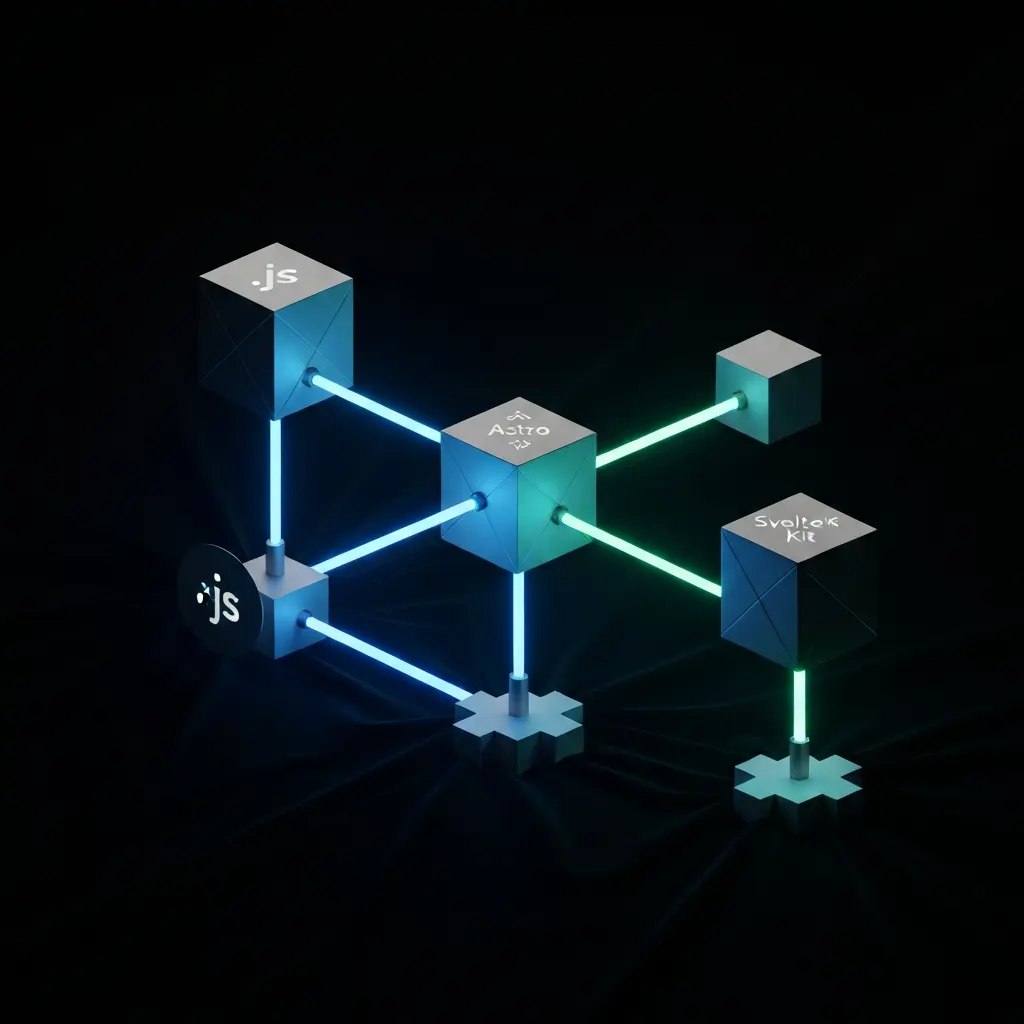
Late January 2026 saw a pivotal shift towards AI-native DX as major frameworks integrated the Model Context Protocol (MCP) to standardise how AI agents interact with development tooling and project context.
📚 Part of our 2026 Astro 6 & Next.js 16 series. For the main head-to-head comparison, see our pillar article: Next.js 16.2 vs Astro 6.1 — The 2026 Framework Speed & Precision Race.
TL;DR: The January 2026 releases of Next.js 16.1 and Astro 6 Beta mark a decisive turn towards AI-native development. The critical innovation is the stable adoption of the Model Context Protocol (MCP), which standardises how AI agents interact with framework internals, from routing schemas to component state, enabling higher-fidelity, context-aware code generation and debugging across the ecosystem.
For years, the promise of AI-assisted coding has been hamstrung by a fundamental disconnect: the LLM’s limited, static understanding of a project’s live architecture. An agent could suggest a component, but it lacked the runtime context to know the project’s routing rules, the shape of its CMS data, or the reactive state model in use. The late January 2026 framework releases—Next.js 16.1, Astro 6 Beta, and Svelte 5.46.0—collectively address this by embedding a common interface for AI tooling directly into the development environment. This move beyond simple autocomplete to a deeply integrated, context-rich partnership is what defines the new ‘AI-native developer experience’.
What is the Model Context Protocol (MCP)?
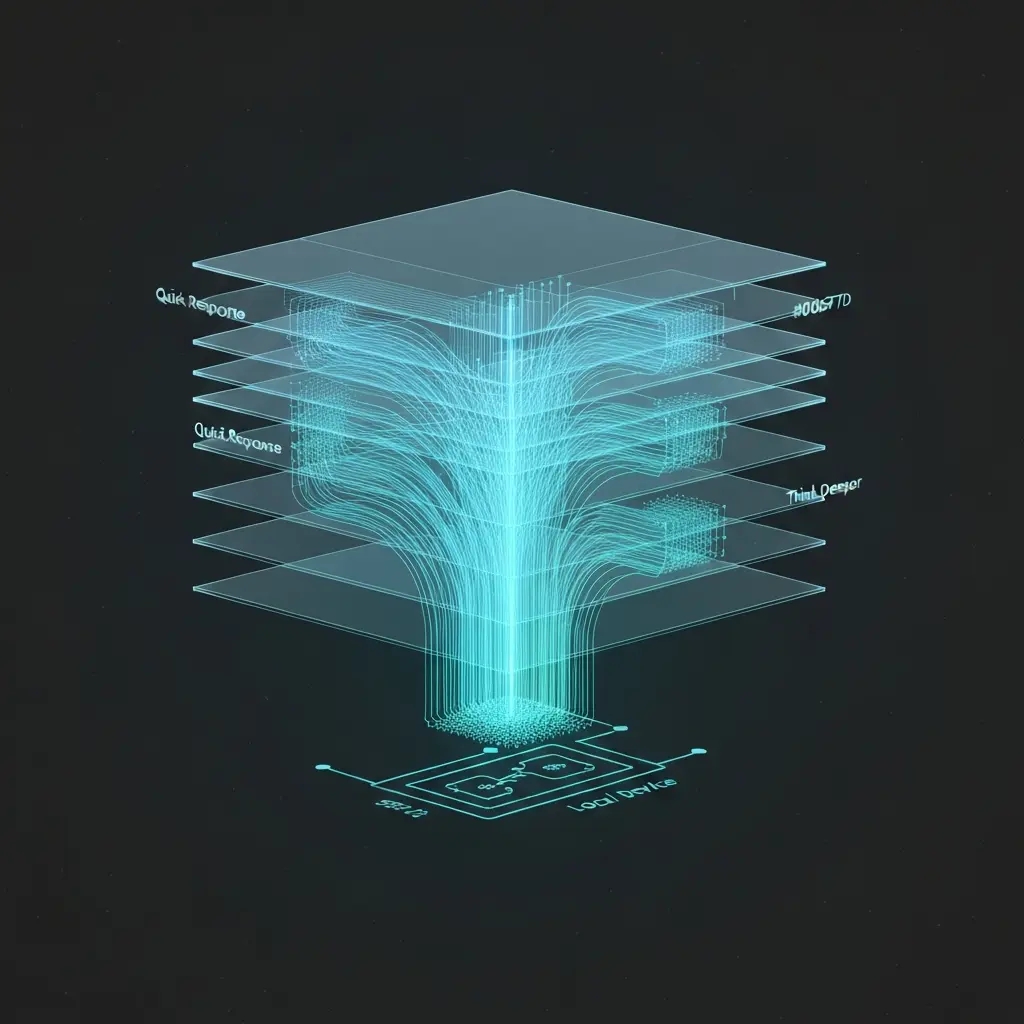
The Model Context Protocol (MCP) is an open standard that defines a structured communication layer between AI coding agents and a software project’s tooling and runtime. It allows an agent to query a framework’s development server for real-time, structured data—such as route definitions, component APIs, build configuration, and live content schemas—transforming the AI from a detached commentator into a context-aware participant within the development workflow. This protocol is the technical cornerstone enabling the AI-native features now stabilising in leading frameworks.
Why Does Standardised AI Context Matter?
The business value of standardising AI interaction cannot be overstated. Prior to MCP integration, AI suggestions were generic, often requiring significant manual correction to align with a project’s specific conventions, security policies, and data patterns. This ‘context gap’ eroded trust and efficiency. By providing AI agents with direct, sanctioned access to the framework’s own understanding of the project, the quality and applicability of generated code improve dramatically. This reduces cognitive load on senior engineers, accelerates onboarding, and ensures architectural consistency, as the AI operates within the guardrails defined by the framework itself.
For example, an agent using the official Next.js MCP server can now query the new proxy.ts configuration to understand the application’s network boundaries before suggesting an API route, ensuring security and routing logic are respected. Similarly, an agent interfacing with Astro 6 can inspect the schema of a Live Content Collection to generate type-safe components that match the exact data shape from a CMS.
Pro Tip: When evaluating AI coding tools in 2026, prioritise those that explicitly advertise MCP client compatibility. This is a stronger indicator of deep, useful integration than vague claims about ‘framework awareness’.
Architectural Deep Dives: New Foundations for Scale
Beyond MCP, these releases deliver foundational upgrades optimised for performance and predictability at scale. Next.js 16’s replacement of middleware.ts with proxy.ts creates a Node.js-native network boundary, offering more predictable behaviour for complex enterprise routing and security logic compared to the previous Edge-runtime-only middleware. Concurrently, Partial Pre-rendering (PPR) gains granularity with Cache Components using the use cache directive, allowing engineers to define caching behaviour per component rather than per route.
Astro 6’s re-architected development server unifies dev and production code paths, eliminating a major source of ‘it worked on my machine’ bugs by ensuring Vite transformations are consistent across all deployment runtimes. Its stabilised Live Content Collections feature is transformative for content-heavy sites, enabling hot-reload of data from headless CMSs or local files without a dev server restart. Svelte 5’s Runes system ($state, $derived) now implements native deep reactivity, automatically tracking mutations within nested objects and arrays, which simplifies state management in complex applications.
// Next.js 16: Granular Cache Control with PPR
// Using the 'use cache' directive for component-level caching
import { unstable_cache } from 'next/cache';

export default async function ProductDetails({ id }) {
  const data = await unstable_cache(
    async () => fetchProductFromDB(id),
    ['product', id],
    { revalidate: 3600 } // 1 hour
  )();
  // This component's fetch is now independently cacheable
  return <ProductView data={data} />;
}
The Performance Engine: Faster Builds and New Output Targets
Cold-start build times have long been a bottleneck in large monorepos. Next.js 16.1 stabilises Turbopack File System Caching, which uses incremental computation to persist compiler artefacts on disk. This can reduce cold-start times by up to 10x, dramatically improving CI/CD pipeline efficiency and local developer experience. Astro 6 introduces a first-class Build Adapters API (alpha), allowing teams to hook into the build process for provider-specific optimisations, such as specialised bundling for Cloudflare Workers.
Perhaps the most striking innovation in deployment flexibility comes from the SvelteKit ecosystem. The community-driven EXE adapter now allows full-stack SvelteKit applications—including server-side logic—to be compiled into a single, portable binary executable. This opens new possibilities for distributing tools, desktop applications, or deploying to environments with strict runtime constraints. Complementing this, Svelte 5.46.0 added a csp option to its render function, enabling automatic hash generation for inline scripts, which is critical for enterprises enforcing strict Content Security Policies.
Pro Tip: For large projects, immediately enable Turbopack’s filesystem caching in Next.js 16.1. The performance gain for iterative development is substantial and requires no code changes. Official documentation is available on the Next.js GitHub repository.
The 2026 Outlook: Consolidation and Specialisation
Looking ahead, 2026 will likely see the Model Context Protocol (MCP) become as fundamental to the AI-native stack as TypeScript is to type safety. We predict a rapid expansion of specialised MCP servers for various backend services (databases, auth providers, design systems), creating a federated context layer for AI agents. Frameworks will compete on the richness and stability of their MCP implementations. Furthermore, the convergence around performance primitives—like Astro’s unified dev server and Next.js’s Turbopack caching—suggests a year where ‘zero-config performance’ becomes a baseline expectation, pushing innovation towards even more granular resource loading and adaptive rendering techniques.
Key Takeaways
- The stable integration of the Model Context Protocol (MCP) across Next.js and Astro is the defining shift, enabling AI agents to work with live project context for higher-fidelity output.
- Next.js 16’s
proxy.tsand granular Partial Pre-rendering (PPR) offer more predictable control for enterprise-scale routing and caching strategies. - Astro 6’s Live Content Collections and rebuilt dev server solve critical content workflow and consistency problems for marketing and editorial sites.
- Svelte 5’s deep reactivity for Runes and SvelteKit’s EXE adapter demonstrate powerful advancements in developer ergonomics and novel deployment targets.
- Investment in persistent, incremental build caching (Turbopack) and extensible build pipelines (Astro Adapters API) is essential for maintaining velocity in large, complex applications.
Conclusion
January 2026 represents a pivotal moment where leading frameworks have moved beyond treating AI as a bolt-on feature. By standardising on the Model Context Protocol and delivering robust, scalable architectural foundations, they are engineering a new, integrated workflow where developers and AI agents collaborate effectively within a shared, structured understanding of the project. This evolution reduces toil, enforces consistency, and allows teams to focus on unique business logic rather than boilerplate. At Zorinto, we help clients navigate these shifts, implementing these AI-native workflows and performance architectures to build faster, more resilient applications that leverage the full potential of their engineering teams.