· Web Architecture · 7 min read
Kotlin Multiplatform 2026: Room 3.0 & Unified Persistence
Room 3.0's KMP-first shift, alongside Compose Multiplatform 1.10.0, establishes a unified persistence standard for native iOS, Android, and Desktop applications.
TL;DR: The April 2026 releases of Room 3.0 Alpha and Compose Multiplatform 1.10.0 signal a decisive shift towards ‘KMP-first’ architecture. By mandating Kotlin Symbol Processing (KSP) and the KMP-capable
androidx.sqlitedriver, Room now provides a single, high-performance persistence layer that compiles natively to ARM64 for iOS, eliminating bridge overhead and enabling true shared business logic.
Introduction
For years, mobile development teams have faced a persistent dilemma: share business logic across platforms and sacrifice native performance and tooling, or duplicate core code for each platform at a significant cost. The Kotlin Multiplatform (KMP) promise was always compelling, but key Jetpack libraries remained tethered to Android, requiring complex adapters and bridges for iOS. This architectural friction culminated in persistence, where the venerable Room library’s reliance on Java Annotation Processing and the Android-specific SupportSQLite API created an impenetrable barrier for true cross-platform data layers.
The landscape shifted decisively in late April 2026. With Room 3.0’s Alpha release moving to a Kotlin-only model and Compose Multiplatform 1.10.0 stabilising critical UI infrastructure, we are witnessing a genuine KMP renaissance. This isn’t just an incremental update; it’s a foundational realignment that enables a single, optimised persistence layer to compile directly to native binaries for iOS, Android, and Desktop. The era of fragmented mobile data architecture is ending, replaced by a unified standard centred on Kotlin Multiplatform.
What is the Kotlin Multiplatform (KMP) Renaissance?
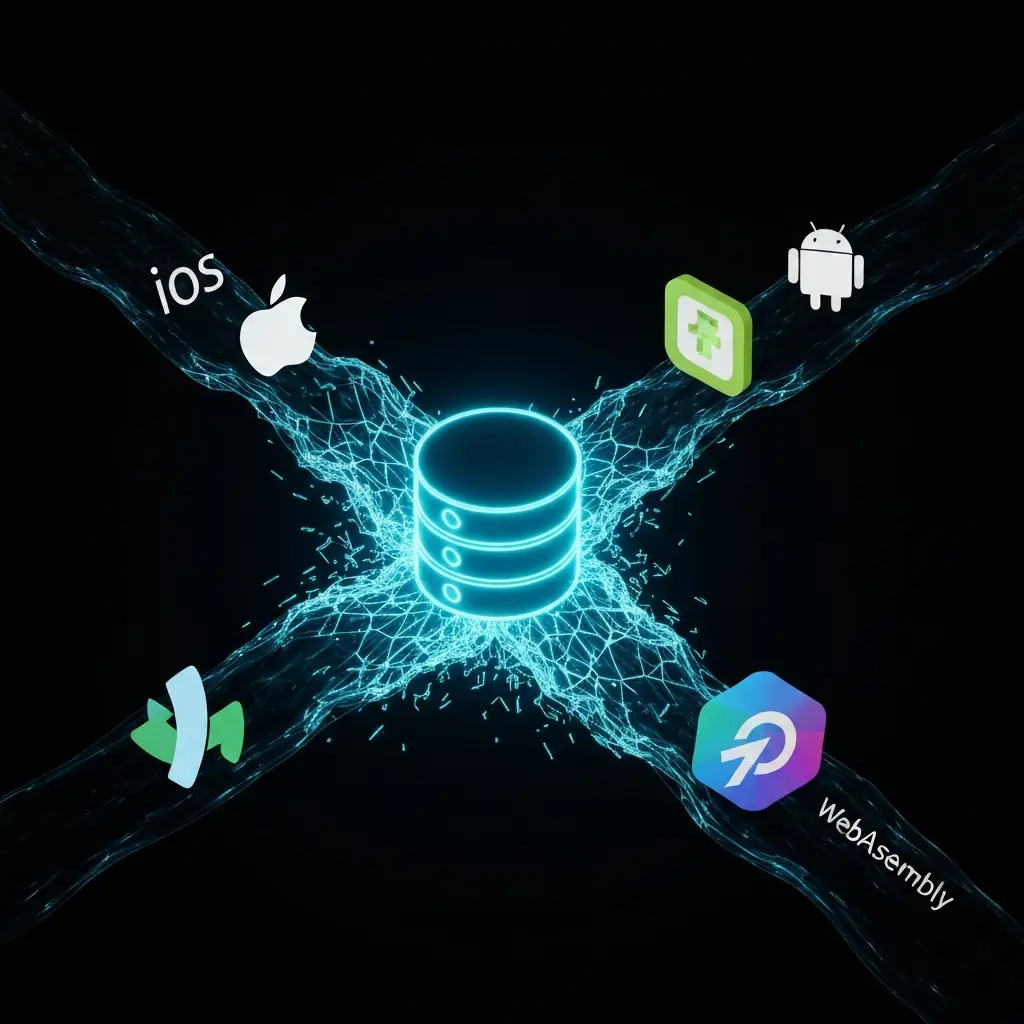
The Kotlin Multiplatform Renaissance refers to the pivotal industry shift in 2026, where core Android Jetpack libraries—spearheaded by Room 3.0—have been fundamentally re-architected to be Kotlin-first and platform-agnostic. This transition, driven by the mandatory adoption of Kotlin Symbol Processing (KSP) and KMP-compatible drivers, enables a single codebase for critical business logic, like database operations, to compile natively to iOS (xcframework), Android, and WebAssembly without runtime bridges. It establishes a new unified persistence standard, moving KMP from a promising experiment to a production-ready architectural foundation for multi-platform applications.
The Core Shift: Room 3.0’s ‘KMP-First’ Foundation
Room 3.0 Alpha 1 is not merely a version bump; it is a declaration of architectural intent. By officially removing support for Java Annotation Processing (AP) and KAPT, it mandates the use of Kotlin Symbol Processing (KSP) for all code generation. This is a critical enabler for Kotlin Multiplatform, as KSP understands Kotlin semantics natively and can generate code that works seamlessly across compilation targets. Concurrently, the deprecation of the legacy SupportSQLite API forces a migration to the new androidx.sqlite driver, which is explicitly designed with KMP compatibility in mind.
The technical implication is profound. Developers can now define a RoomDatabase and its associated @Entity data classes in the commonMain source set of a KMP project. Using the KSP-powered Room compiler, this single definition generates the necessary platform-specific implementations. On iOS, it leverages the LLVM backend to produce a direct ARM64 native binary (.xcframework), eliminating the performance overhead of runtime bridges or interpreters that plagued earlier cross-platform solutions.
// In commonMain
@Database(entities = [User::class], version = 1)
abstract class AppDatabase : RoomDatabase() {
    abstract fun userDao(): UserDao
}

@Entity
data class User(
    @PrimaryKey val id: Int,
    val name: String,
    val email: String
)
Pro Tip: Begin migrating existing Room projects to KSP immediately, even before targeting iOS. The performance and correctness improvements in KSP over KAPT provide immediate benefits on Android and prepare your codebase for the KMP transition.
The official Android documentation now explicitly guides developers through this new androidx.sqlite KMP setup, a clear signal of the intended direction.
Beyond Persistence: The Composable Ecosystem Matures
Room 3.0 does not exist in a vacuum. Its release aligns perfectly with the stabilisation of Compose Multiplatform 1.10.0, which introduces ‘Navigation 3’ for non-Android targets. This provides a unified navigation stack that inherently understands and respects platform-specific lifecycle events on iOS and Desktop. Furthermore, the ‘Compose Hot Reload’ tool reaching version 1.0.0 stability is a game-changer for developer experience on iOS. Developers can now witness sub-second UI changes on iOS simulators without enduring a full LLVM recompilation cycle, dramatically accelerating the feedback loop for shared UI development.
This maturation of the surrounding ecosystem is what transforms the KMP proposition from a viable persistence layer into a holistic application architecture. Teams can now share not only their data layer but also their navigation logic and UI components, all while maintaining native performance and a fluid development workflow. The coupling of a robust persistence standard with a responsive UI toolkit closes the last major gaps for building full-featured, production-grade applications with Kotlin Multiplatform.
Why Does This Architectural Shift Matter Now?
The convergence of these technical advancements arrives at a moment of significant market evolution. Industry benchmarks from April 2026 show a clear trend: the deployment of local-first AI models like Gemma 4 within mobile apps has increased eightfold compared to mid-2025, according to Gartner. These on-device models require efficient, high-performance local data storage and retrieval—precisely the use case for which a natively compiled, unified Room database is now optimised.
Meanwhile, competitive frameworks are also advancing. Flutter maintains a strong market share, partly due to its sophisticated shader pre-compilation addressing UI jank. React Native has completed its architectural transition, fully deprecating its legacy bridge in favour of the JSI foundation. However, KMP’s unique value proposition is now crystallising: it offers true native performance on both primary mobile platforms without sacrificing the developer experience or language safety of Kotlin. By compiling business logic directly to ARM64 for iOS, it achieves performance parity with pure Swift, a claim other cross-platform solutions cannot make.
Pro Tip: When evaluating KMP for a new project, benchmark the data-intensive paths—complex queries or bulk inserts—against native Swift implementations. With Room 3.0 and direct LLVM compilation, you should now see negligible performance differentials, solidifying the business case for shared logic.
The 2026 Outlook: Consolidation and Specialisation
Looking ahead through 2026 and into 2027, the trajectory set by these releases points towards two key trends. First, we will see a consolidation around KMP as the preferred architecture for teams heavily invested in Kotlin and seeking maximal code reuse without the typical cross-platform trade-offs. The ‘KMP-first’ direction of Jetpack libraries will create a powerful gravitational pull for Android-centric organisations expanding to iOS.
Second, the role of AI in the mobile development lifecycle will deepen. With 42% of recent mobile code commits reportedly assisted by specialised mobile-LLMs (2026 State of Code Survey), we can expect these tools to become deeply integrated into the KMP workflow. Imagine an IDE agent that can not only generate a Room @Entity but also propose optimal @Database schemas and even generate the corresponding SwiftUI or Compose UI forms. The combination of a stable, unified technical foundation and AI-augmented development will define the next phase of mobile engineering productivity.
Key Takeaways
- Room 3.0’s mandatory shift to KSP and
androidx.sqliteis a strategic move to establish a unified, high-performance persistence standard for Kotlin Multiplatform applications. - Compose Multiplatform 1.10.0, with stable Navigation and Hot Reload, provides the complementary UI framework needed for a complete shared application architecture.
- KMP’s compilation via the LLVM backend to direct ARM64 binaries (.xcframework) eliminates runtime bridge overhead, achieving true native performance parity on iOS.
- The convergence of local-first AI demands and a mature KMP data layer creates a powerful use case for shared, optimised business logic across platforms.
- Developers should immediately adopt KSP for Room and explore the
androidx.sqliteKMP driver to future-proof Android projects and enable iOS targets.
Conclusion
April 2026 marks a pivotal moment in mobile architecture. The releases of Room 3.0 Alpha and Compose Multiplatform 1.10.0 are not isolated events but coordinated strokes that redraw the boundaries of what is possible with shared code. By dismantling the final Android-specific barriers in persistence and maturing the surrounding UI ecosystem, they transform Kotlin Multiplatform from a compelling idea into a pragmatic, high-performance foundation for modern application development. The unified persistence standard they establish resolves a long-standing pain point, enabling teams to focus on innovation rather than integration. At Zorinto, we are already leveraging these advancements to help our clients architect resilient, performant applications that deploy seamlessly across mobile and desktop platforms from a single logic core.