· Web Architecture · 7 min read
Coolify v4 Strategy After Hetzner's 50% Infrastructure Surcharge
Hetzner's 2026 price surge forces a strategic rethink. This analysis explores managing Coolify v4 workloads, leveraging Nixpacks, and optimising costs in the new infrastructure landscape.
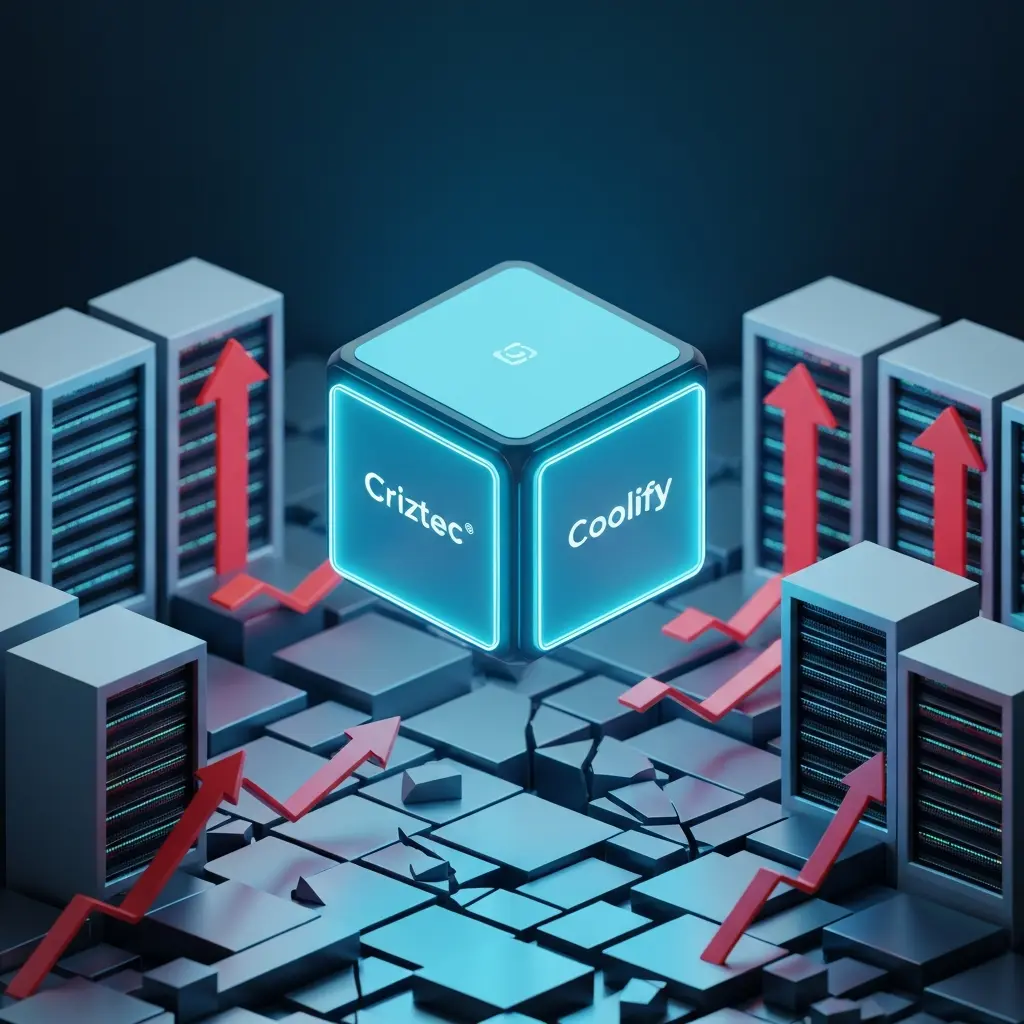
TL;DR: The convergence of Hetzner’s 2026 price hikes, Heroku’s feature freeze, and AI-driven hardware shortages is catalysing a strategic shift. Deploying Coolify v4 with Nixpacks on heterogeneous infrastructure becomes a critical lever for controlling costs while retaining modern deployment workflows, albeit with an increased observability overhead.
Introduction
The architecture of web application deployment is undergoing its most significant divergence in a decade. For years, the default path led to managed platforms or predictable IaaS providers. This equilibrium has shattered in 2026. Two seismic events have realigned the landscape: Hetzner’s drastic infrastructure surcharge and Heroku’s transition to a sustaining engineering model. These shifts are not merely about cost but about architectural autonomy. They compel senior engineers to reconsider foundational assumptions about vendor lock-in, egress economics, and build determinism. The pivot is towards orchestrated self-hosting, with Coolify v4 emerging as the production-stable centrepiece for teams seeking PaaS-like ergonomics without the associated premium. This transition, however, introduces new complexities around observability and hardware procurement that demand a rigorous technical strategy.
What is the 2026 Self-Hosting Divergence?
The 2026 Self-Hosting Divergence describes the strategic and technical separation from monolithic cloud and PaaS vendors, driven by unprecedented cost pressure and platform stagnation. It is characterised by the adoption of self-managed application orchestration platforms, like Coolify v4, to deploy workloads across a heterogeneous mix of cost-optimised infrastructure. This model exchanges the convenience of a single vendor for granular cost control, leveraging stark disparities in egress pricing and compute costs. The divergence is not a return to raw server management but a move to a higher abstraction layer that retains developer experience while mitigating vendor-specific financial risk. The 2026 Heroku alternatives are defined by this orchestration-first approach.
The Catalysts: Market Forces Re-drawing the Map
The 2026 infrastructure landscape is shaped by supply-chain economics and corporate strategy, not just software trends. Hetzner’s ‘Hardware Reset’ of April 2026, with price increases of 30-50% on its CAX/CCX lines, is a direct symptom of the AI infrastructure boom. Semiconductor foundries are prioritising High Bandwidth Memory (HBM) production for AI accelerators, creating a severe shortage and a 30%+ price jump for standard server-grade DRAM. This HBM bottleneck directly impacts the cost base of every commodity VPS provider. Concurrently, Salesforce’s decision to place Heroku into a ‘Sustaining Engineering’ phase in February 2026 has removed a generation’s default PaaS from the innovation cycle. These parallel events create a vacuum. The business value lies in decoupling application lifecycle management from these volatile underlying layers, making the self-hosted PaaS model a financial imperative rather than a niche hobbyist choice.
Pro Tip: When modelling total cost of ownership (TCO) for 2026, treat IPv4 addresses as a separate, depreciating line item. With European IaaS providers now charging ~$2.40/month/IP, architect for shared ingress proxies or evaluate IPv6-only worker nodes where feasible.
Architecting with Coolify v4: Beyond the One-Click Template
The production-stable release of Coolify v4 in early 2026 offers a mature orchestration core, but its strategic value is unlocked through specific features. Its integration of Nixpacks as the default build engine is transformative. Nixpacks provides deterministic environment detection, creating reproducible build artefacts without a Dockerfile. This standardises the deployment pathway across your team and eliminates a common source of ‘works on my machine’ bugs. For instance, a Node.js application with a package.json is automatically built using the appropriate Node version and dependencies.
# Coolify automatically invokes Nixpacks for a Node.js app.
# No Dockerfile required.
nixpacks build ./my-app --name my-app-image
Furthermore, its Traefik-based routing now supports advanced patterns like Blue-Green deployments. The platform can keep legacy containers live until new instances pass health checks (returning HTTP 200), enabling zero-downtime migrations that rival commercial platforms. This moves self-hosting from a ‘good enough’ state to a professionally resilient deployment pipeline. As noted in the Coolify v4 documentation, this health-check logic is fully configurable, allowing teams to define what ‘healthy’ means for stateful services.
Navigating the New Cost Calculus and Observability Gap
The raw infrastructure savings are compelling, but the complete financial picture has nuances. The most glaring is the 15x egress premium. While platforms like Vercel charge approximately $0.15/GB, providers like Hetzner and DigitalOcean maintain rates of $0.01-$0.02/GB. For data-intensive applications, self-hosting via Coolify v4 on these providers creates immediate, recurring savings. However, this is offset by the nascent observability gap in the Coolify ecosystem. Unlike comprehensive PaaS offerings, Coolify lacks native, integrated error tracking, performance monitoring, or session replay.
Bridging this gap requires a deliberate, additive strategy. Integrating third-party tools like Sentry for error tracking or Highlight for session replay is mandatory for production reliability, but it adds complexity and cost—typically an additional ~$150/month to a stack’s TCO. The architectural response is to treat observability as a first-class citizen in your Coolify v4 provisioning scripts, baking in instrumentation and agent deployment from the outset, rather than retrofitting it later.
Pro Tip: Mitigate dedicated server volatility (like Hetzner’s new setup fees) by designing your Coolify v4 cluster for heterogeneity. Use cheaper, volatile nodes for stateless workers and reserve committed, higher-cost nodes for stateful databases. Coolify’s service labels can direct deployments accordingly.
The 2026 Outlook: Heterogeneity and Automation
Looking ahead, the architectural trend for the remainder of 2026 and into 2027 will be defined by intelligent heterogeneity and infrastructure-as-code (IaC) deep integration. Teams will not simply migrate from Heroku to a single Coolify cluster on a new provider. Instead, they will deploy Coolify v4 as a control plane over a dynamic mix of resources: leveraging spot instances for batch processing, committed instances for core services, and even edge locations for global low-latency. The procurement volatility signalled by Hetzner’s April 29th dedicated server setup fees will make flexibility paramount. We predict a surge in the use of tools like Pulumi or Terraform to provision the underlying infrastructure, with Coolify then being deployed as the final, application-facing layer. This two-tiered automation will be the hallmark of resilient, cost-optimised architecture in this new era.
Key Takeaways
- Treat Coolify v4 as a strategic control plane for managing workloads across multiple, cost-optimised infrastructure providers, not as a direct Heroku replacement on a single server.
- Leverage Nixpacks’ deterministic builds to eliminate environment drift and standardise deployments across development and production, reducing a major source of operational overhead.
- Architect explicitly for the observability gap by integrating and budgeting for third-party monitoring, error tracking, and session replay tools from the project’s inception.
- Model your TCO with 2026-specific variables: treat IPv4 as a rented asset, factor in ~$2.40/month per IP, and capitalise on the massive egress savings of IaaS over managed platforms.
- Design your cluster for resource heterogeneity using Coolify’s labelling system to insulate stateful services from volatile node pricing and one-time setup fees.
Conclusion
The 2026 Self-Hosting Divergence represents a fundamental recalibration of value in web architecture. It moves the lever of control back to engineering teams, trading the diminishing returns of monolithic PaaS platforms for the financial and technical granularity of orchestrated self-hosting. While Coolify v4 provides a robust, production-ready foundation for this shift, success hinges on a holistic strategy that encompasses cost modelling, observability integration, and heterogeneous cluster design. The organisations that thrive will be those that view this not as a mere infrastructure change, but as an opportunity to build more resilient, portable, and cost-aware application delivery systems. At Zorinto, we guide clients through precisely this architectural transition, implementing Coolify v4 clusters with the full-stack observability and financial governance required for sustainable success in the new infrastructure landscape.